10th August 2026
Chemical Logistics Company Fined £425,000 After Fatal Fall from Height
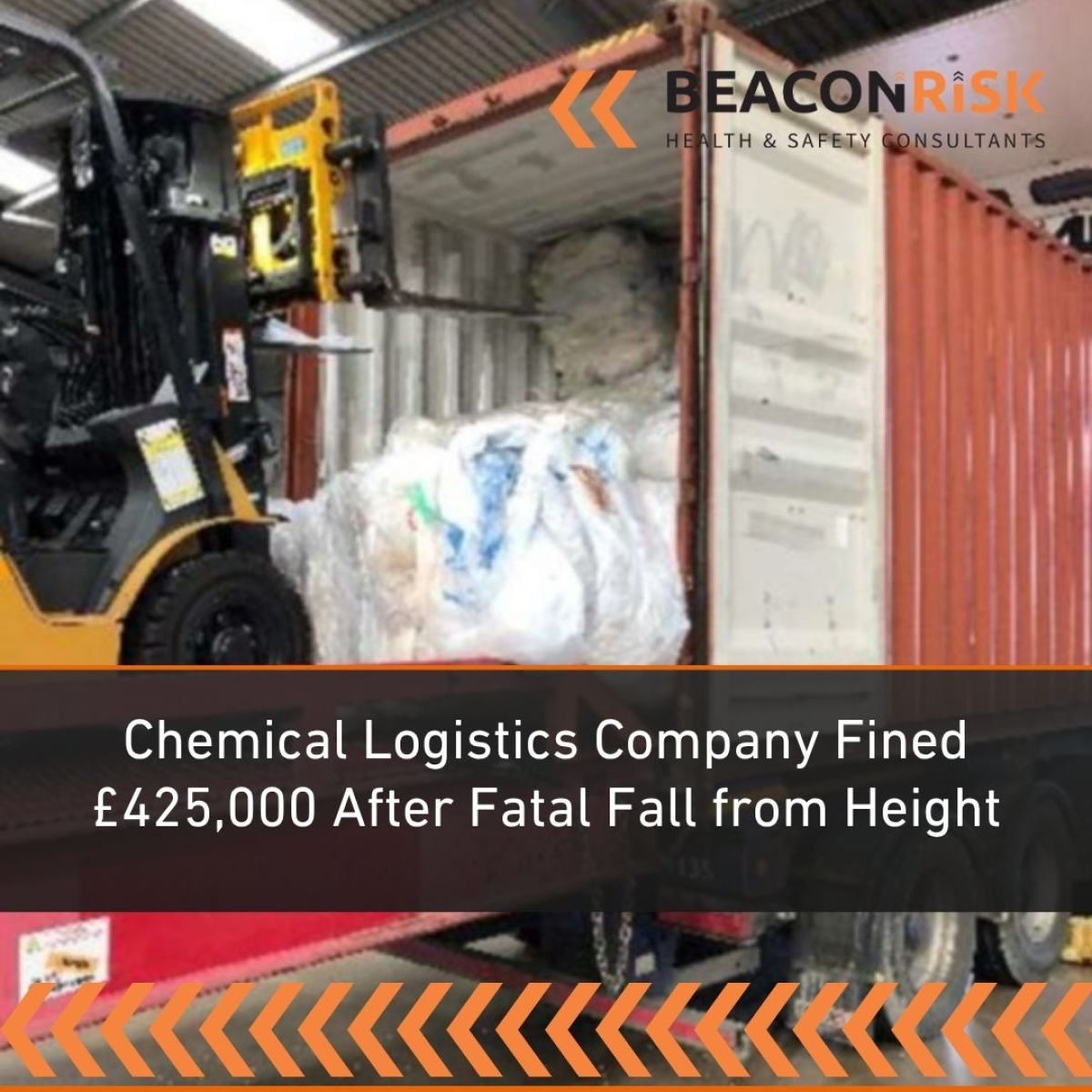
A recent Health and Safety Executive (HSE) prosecution has provided another tragic reminder of the importance of properly assessing and controlling the risks associated with working at height.
Chemical logistics company Bertschi UK Limited has been fined £425,000 after warehouse supervisor Peter Hutchinson suffered fatal injuries following a fall from a mobile loading ramp at the company's Middlesbrough site.
The incident highlights why businesses must not become complacent about everyday working practices – particularly where employees are required to work at height.
What happened?
On 4 November 2021, 60-year-old Peter Hutchinson was helping to load plastic waste bales into a shipping container.
During the operation, a plastic bale slipped from the forklift truck being used for loading. Mr Hutchinson stepped backwards and fell approximately 1.5 metres from the mobile loading ramp onto the concrete floor below.
He suffered serious injuries and sadly died in hospital later that month.
The subsequent HSE investigation identified significant shortcomings in the way the work had been planned and the risks controlled.
What did the HSE investigation find?
The HSE found that Bertschi UK Limited had failed to properly assess the risks associated with the loading operation, including the risks created by pedestrians using mobile loading ramps.
Employees had been permitted to access the ramps without handrails, despite the ramp manufacturer's instructions stating that pedestrians should not use them unless handrails were fitted.
Importantly, the investigation also found that the company had not sufficiently considered reasonably practicable alternatives that could have avoided working at height altogether.
These included using existing loading bays or positioning containers at ground level before loading.
£425,000 fine plus costs
Bertschi UK Limited was found guilty of breaching Section 2(1) of the Health and Safety at Work etc. Act 1974 and Regulations 4(1)(a) and 6(2) of the Work at Height Regulations 2005.
Following a trial at Teesside Crown Court in April 2026, the company was fined £425,000 and ordered to pay £119,258 in costs at a hearing on 17 July 2026.
What can other businesses learn from this?
Incidents like this are a stark reminder that working at height doesn't necessarily mean somebody working several storeys above the ground.
A fall of 1.5 metres can have devastating consequences.
Employers have a responsibility to properly plan work at height and assess the risks involved. Wherever reasonably practicable, working at height should be avoided altogether.
Where it cannot be avoided, suitable measures should be introduced to prevent falls and protect employees.
Businesses should regularly consider:
- Are our working at height risk assessments current and suitable?
- Could the task be completed without working at height?
- Are appropriate barriers, handrails or other fall-prevention measures in place?
- Are we following manufacturers' safety instructions for equipment?
- Have employees been properly trained?
- Have working practices changed since the original risk assessment was completed?
- Are unsafe practices becoming accepted simply because "we've always done it that way"?
That final question is particularly important.
A task being completed hundreds of times without an accident doesn't necessarily mean it is safe. It can simply mean an incident hasn't happened yet.
When did you last review your working at height procedures?
Risk assessments shouldn't be paperwork that gets completed, filed away and forgotten.
They should reflect what is actually happening in your workplace.
If your employees use loading ramps, ladders, scaffolding, platforms, roofs, mezzanines or any other equipment or areas where there is a risk of falling, it's worth regularly reviewing your arrangements.
At Beaconrisk, we help businesses make health and safety simpler. From risk assessments and competent health and safety advice to policies, procedures, training and accreditation support, our team can help you understand what you need to do and put practical measures in place.
If you're unsure whether your current working at height procedures are adequate, speak to the Beaconrisk team.
Sometimes a fresh pair of experienced eyes can spot a risk that's become part of the everyday routine.