22nd September 2026
Manufacturing Company Fined £40,000 After Worker Fractures 12 Ribs in Lifting Incident
A recent Health and Safety Executive (HSE) prosecution is a serious reminder of what can happen when lifting operations are not properly assessed, planned and supervised.
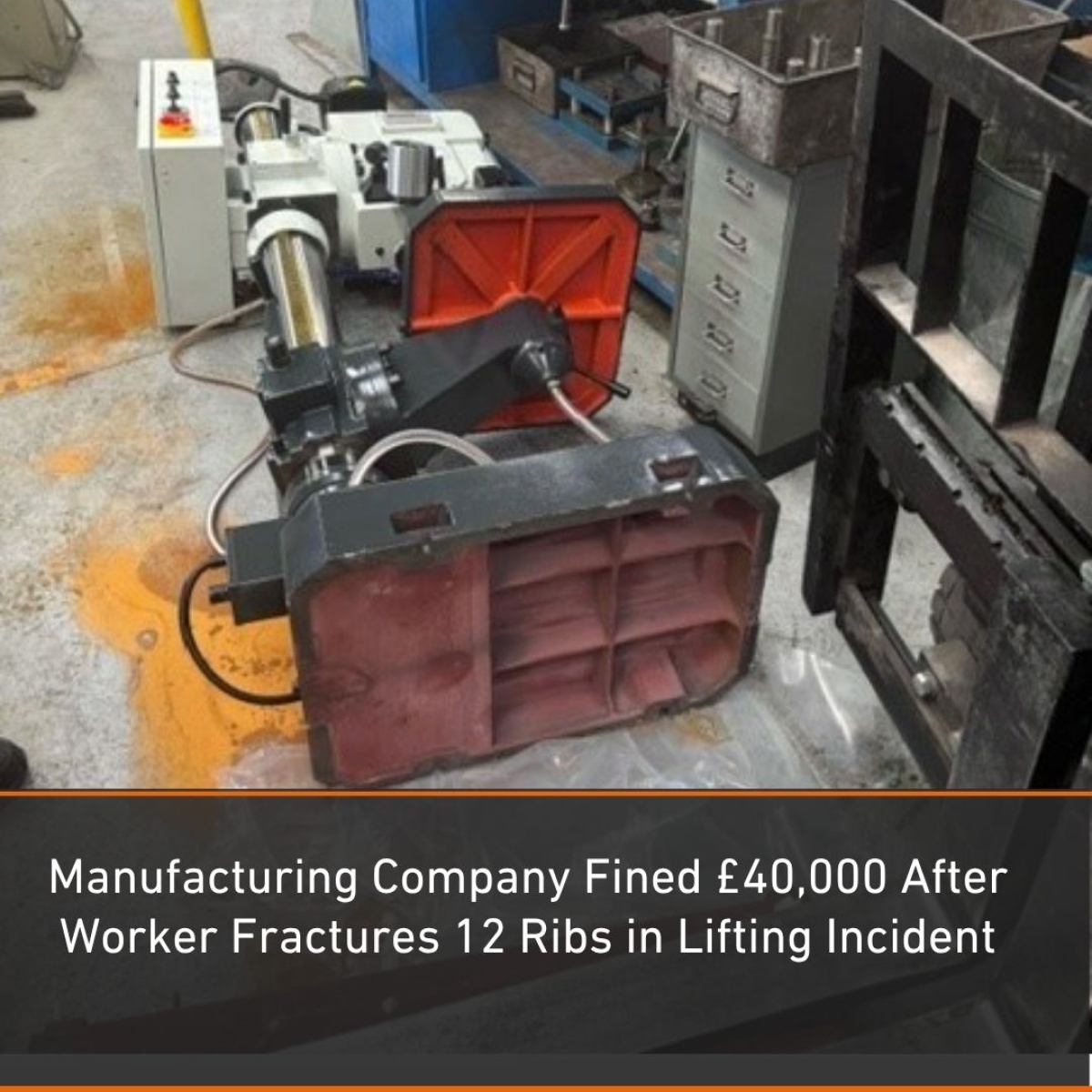
A manufacturing company has been fined £40,000 after a worker fractured 12 ribs when a pillar drill weighing approximately 500kg became unstable and fell during a lifting operation.
Although the incident happened within a manufacturing business, the lessons are highly relevant to the construction sector, where forklifts, telehandlers and other lifting equipment are regularly used to move heavy machinery, materials and equipment.
What happened?
On 24 June 2024, a 36-year-old employee of The Micro Spring and Presswork Company Limited was helping to lift a newly purchased pillar drill at the company’s site in Redditch.
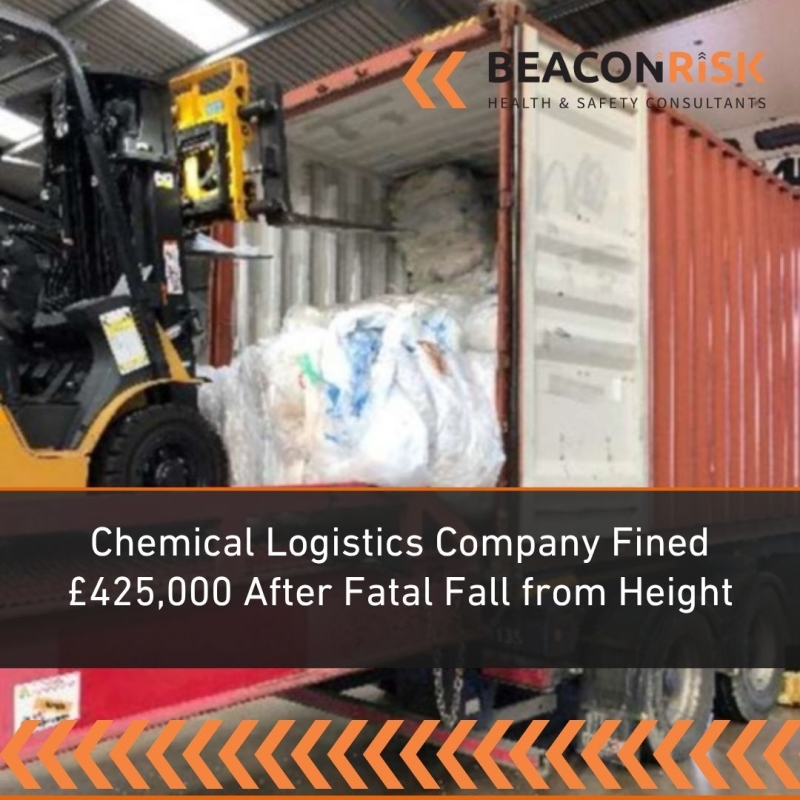
A forklift truck was being used to move the pillar drill, which weighed approximately half a tonne.
During the operation, the drill became unstable and fell, striking the employee. He suffered serious injuries, including fractures to 12 ribs.
The incident demonstrates how quickly a routine-looking task can become dangerous when lifting heavy or awkward equipment.
What did the HSE investigation find?
The HSE investigation found that the company had failed to carry out a suitable and sufficient assessment of the risks associated with the lifting operation.
It had also failed to ensure that the operation was:
- Properly planned by a competent person
- Appropriately supervised
- Carried out safely
The Micro Spring and Presswork Company Limited pleaded guilty to breaching Section 2(1) of the Health and Safety at Work etc. Act 1974.
At Kidderminster Magistrates’ Court on 25 August 2026, the company was fined £40,000 and ordered to pay £5,032 in costs.
HSE inspector Charlie Rowe described the incident as entirely preventable and stressed that employers must ensure lifting operations are properly planned, supervised and completed safely.
What can construction businesses learn from this?
Lifting operations are part of everyday life on many construction sites. Forklifts, telehandlers, cranes, hoists and other equipment may be used to move plant, tools, steelwork, materials and heavy loads.
However, familiarity can lead to complacency.
A forklift or telehandler being available does not automatically mean it is suitable for every lifting task. The weight, shape, stability and centre of gravity of the load must all be considered, together with the equipment, attachments, ground conditions and people working nearby.
Before any lifting operation begins, construction businesses should consider:
- Has the task been properly risk assessed?
- Has the weight and stability of the load been confirmed?
- Is the lifting equipment suitable for the task and load?
- Are the correct attachments and accessories being used?
- Has the operation been planned by someone with the necessary competence?
- Is appropriate supervision in place?
- Are workers kept outside the area where the load could fall?
- Have equipment operators and other employees received suitable training?
- Could a safer lifting method be used?
A safe system of work must reflect what will actually happen on site - not simply what is written in a generic risk assessment.
Never improvise a lifting operation
Time pressures, delivery schedules and changing site conditions can sometimes tempt workers to “make do” with the equipment available.
But lifting a heavy or awkward item without a suitable plan can expose employees and contractors to crushing, trapping and struck-by risks.
If a load becomes unstable, workers may have very little time to react. Nobody should stand beneath, beside or within the potential fall zone of a suspended or unstable load.
Even a one-off lifting task must be properly assessed and planned. The fact that an operation will only take a few minutes does not reduce the potential consequences if something goes wrong.
When did you last review your lifting procedures?
Risk assessments and lifting plans should be reviewed whenever equipment, loads, working methods or site conditions change.
Construction businesses should also check whether informal or improvised practices have become accepted over time simply because previous lifts have been completed without an incident.
A task being carried out successfully before does not necessarily mean it is safe. It may simply mean that something has not yet gone wrong.
At Beaconrisk, we help construction businesses make Health & Safety simpler. Our experienced team can support you with risk assessments, safe systems of work, competent Health & Safety advice, policies, procedures, training and accreditation.
If you are unsure whether your current lifting arrangements are suitable - or you would benefit from a fresh pair of experienced eyes - contact the Beaconrisk team.
Sometimes spotting and correcting one unsafe practice is enough to prevent a life-changing injury.